
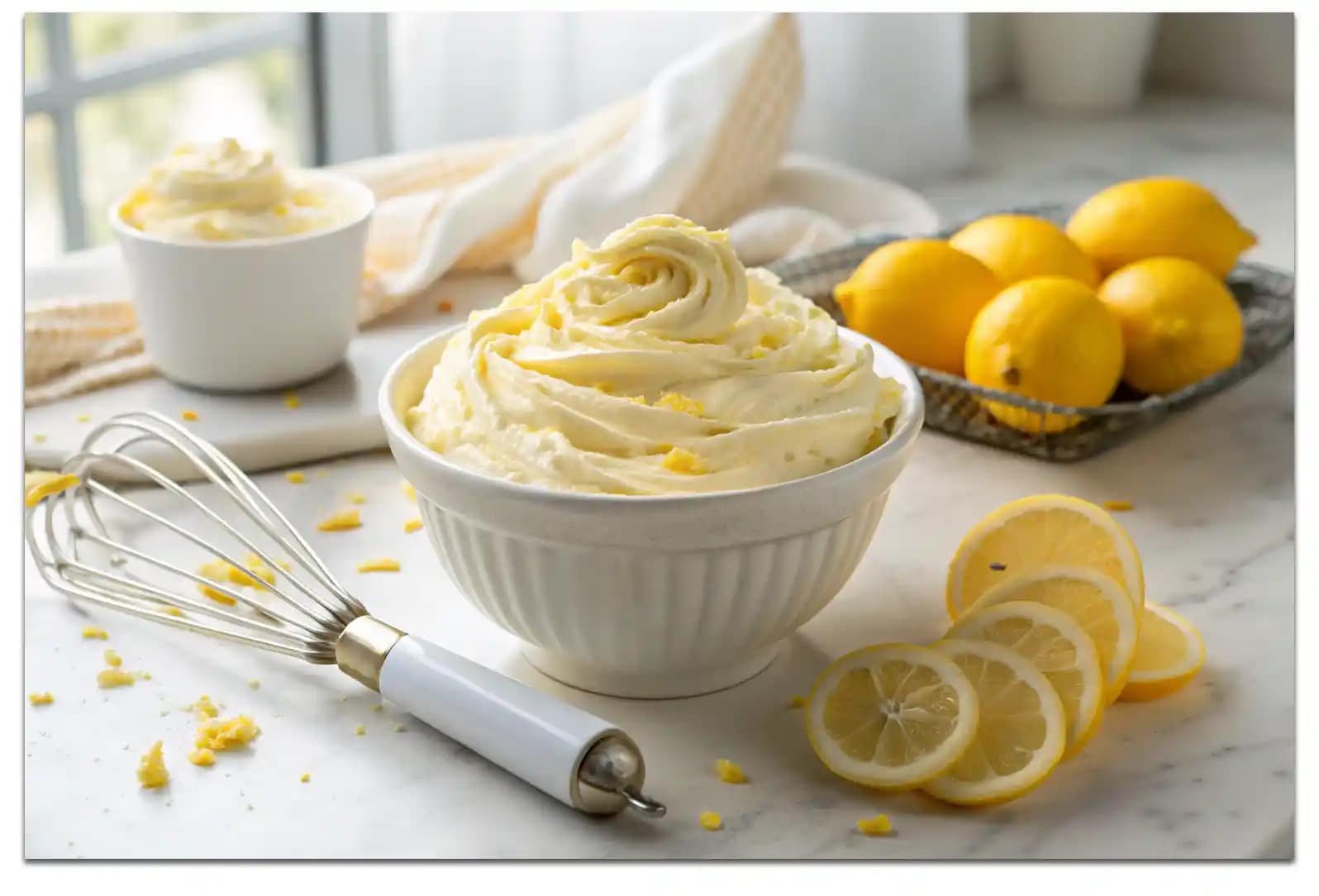
You know what makes or breaks a cake? The frosting. And if you’ve been slapping store-bought stuff on your homemade cakes, we need to talk.
This lemon buttercream frosting recipe is ridiculously easy and tastes a thousand times better than anything from a tub. I’ve been making this for years, and honestly, it’s become my go-to for everything.
The bright lemon flavor cuts through the sweetness perfectly. Plus, it pipes beautifully if you’re into cake decorating. If not, it spreads like a dream too.
Prep Time: 10 minutes
Total Time: 10 minutes
Yield: Enough to frost 12 cupcakes or one 9-inch layer cake
Why This Lemon Buttercream Recipe Works
Most buttercream recipes are way too sweet. Like, “gives you a headache after one bite” sweet. This one balances the sugar with fresh lemon juice and zest.
The secret is using both lemon juice and zest together. The juice adds tartness while the zest brings those essential oils that make the flavor pop.
And unlike some finicky frosting recipes, this one comes together in about 10 minutes. No fancy equipment required—just a mixer and a few ingredients.
IMO, this is hands down the best buttercream frosting for anyone who actually likes tasting lemon and not just sugar.
Ingredients You’ll Need
Here’s the beauty of this recipe—you probably have everything already. No weird specialty ingredients or expensive extracts needed.
For the Frosting:
- 1 cup (2 sticks) unsalted butter, softened
- 4 cups powdered sugar (sifted)
- 3 tablespoons fresh lemon juice
- 2 tablespoons lemon zest (about 2 lemons)
- 1 teaspoon vanilla extract
- 2-3 tablespoons heavy cream or milk
- Pinch of salt
That’s it. Six simple ingredients that create magic together. You could even make this a small batch lemon buttercream by halving everything.
If you want to experiment with buttercream ideas, this base works perfectly. You can easily turn it into how to make orange frosting by swapping citrus.
How To Make Lemon Buttercream Frosting (Step by Step)
Alright, let’s get into the actual process. This is so easy that even if you’ve never made homemade frosting recipes before, you’ll nail it.
Step 1: Prep Your Butter
First things first—your butter needs to be properly softened. We’re talking room temperature, not melted or straight from the fridge.
Leave it out for about 30-60 minutes before you start. You should be able to press your finger into it easily without it being greasy.
This step is crucial. Cold butter won’t cream properly, and melted butter will make your frosting soupy. Room temp is the sweet spot.
Step 2: Beat That Butter
Cut your softened butter into chunks and toss it in your mixing bowl. Beat it on medium speed for about 2-3 minutes.
You want it to look light and fluffy, almost like whipped butter. This incorporates air and creates that smooth, creamy texture we’re after.
Don’t skip this step or rush it. Properly beaten butter is the foundation of good buttercream frosting. Trust the process here.
Step 3: Add Sugar Gradually
Now here’s where people usually mess up—they dump all the powdered sugar in at once. Don’t do that unless you want a sugar cloud in your kitchen.
Add the sifted powdered sugar one cup at a time. Beat on low speed after each addition until it’s mostly incorporated.
Start with low speed to avoid the sugar explosion, then increase to medium once it’s mixed in. Each cup should take about 30 seconds to incorporate.
After all the sugar is in, beat on medium-high for another minute. Your frosting should look thick and very pale at this point.
Step 4: Mix in the Lemon
This is where the magic happens. Add your fresh lemon juice, lemon zest, and vanilla extract all at once.
Beat on medium speed for about 1-2 minutes. You’ll notice the color changes slightly as the lemon juice incorporates—that’s totally normal.
The frosting might look a bit separated or curdled at first. Keep beating and it’ll come together beautifully. Sometimes it just needs a minute.
Step 5: Adjust the Consistency
Now we dial in the perfect texture. Add your heavy cream one tablespoon at a time, beating between additions.
For piping frosting on cupcakes, you want it thick enough to hold its shape. For spreading on a lemon cake with lemon frosting, slightly thinner works better.
If it’s too thick, add more cream. Too thin? Add a bit more powdered sugar. You’re looking for smooth and spreadable.
Add that pinch of salt and give it one final beat. The salt might seem weird, but it balances the sweetness perfectly.
Step 6: Test and Taste
Grab a spoon and taste it. Seriously, this is the best part of making frosting. Does it need more lemon? Add a bit more juice or zest.
Want it sweeter? Add another half cup of powdered sugar. This is your frosting—make it work for you and your taste preferences.
The beauty of this butter cream recipe for cake is how easily you can customize it. Every batch can be slightly different based on your mood.
Perfect Pairings for Lemon Buttercream
This frosting is incredibly versatile. I’ve used it on everything from simple vanilla cupcakes to elaborate layer cakes, and it always delivers.
Lemon Cake Recipe: Obviously, this is the classic pairing. Lemon on lemon might sound intense, but it’s absolutely divine. The frosting adds richness to balance the cake.
Vanilla Cupcakes: Want a bright twist on classic vanilla? This lemon buttercream filling or topping transforms simple cupcakes into something special.
Lemon Chantilly Cake: Use this as a component in building layers. It works beautifully with lemon curd and fresh berries between layers.
Lemon Curd Cupcakes: Fill cupcakes with lemon curd, then pipe this frosting on top. The combination of tangy curd and creamy frosting is unbeatable.
You could even use it as lemon filling for cake if you make it slightly thinner. Just reduce the powdered sugar by a cup.
Variations Worth Trying
Once you’ve mastered the basic recipe, feel free to experiment. This is where you can really make it your own.
Lemon Buttercream Frosting With Lemon Extract: Add half a teaspoon of lemon extract along with the juice for even more intense lemon flavor.
Lemon Cream Cheese Frosting Hybrid: Replace 4 tablespoons of butter with softened cream cheese. You get tanginess from both the lemon and the cheese.
Lemon Ermine Frosting Style: This is trickier, but you can make a cooked flour base and fold it into the buttercream for a less sweet version.
Lemon Italian Buttercream Frosting: Use this recipe as inspiration but make Italian buttercream with a sugar syrup base. More stable but more work.
For flavored buttercream frosting variations, try adding a tablespoon of poppy seeds or a bit of lavender. Get creative with it!
Storage and Make-Ahead Tips
Let’s talk about keeping this frosting fresh. Because sometimes you need to make things ahead, and that’s totally fine.
Room Temperature: If you’re using it the same day, you can leave it at room temperature for up to 4 hours. Just cover it with plastic wrap.
Refrigerator: Store in an airtight container for up to one week. The butter will harden, so you’ll need to re-whip it before using.
Freezer: This freezes beautifully for up to 3 months. Thaw overnight in the fridge, then let it come to room temperature and re-whip.
When re-whipping refrigerated or frozen frosting, beat it on medium speed for 2-3 minutes. It’ll look fluffy and smooth again, just like fresh.
Troubleshooting Common Issues
Even the best bakers run into frosting problems. Here’s how to fix the most common issues with this lemon frosting recipe.
Too Runny
Your butter was probably too warm or you added too much liquid. Pop the bowl in the fridge for 10-15 minutes, then beat again.
You can also add more powdered sugar, a quarter cup at a time, until it thickens up. This happens to everyone sometimes—don’t stress.
Too Stiff
Add more cream or lemon juice, one teaspoon at a time. Beat well between additions until you hit the right consistency.
Sometimes the frosting just needs more liquid. The humidity and temperature in your kitchen affect the final texture more than you’d think.
Grainy Texture
This usually means your powdered sugar wasn’t sifted or your butter wasn’t soft enough. Beat it longer on high speed to break down the sugar crystals.
If that doesn’t work, you can add a tablespoon of corn syrup and beat for another minute. It helps smooth everything out.
Not Lemony Enough
Easy fix—add more lemon zest and juice. Start with an extra tablespoon of each and taste. Keep adding until it hits your preference.
Fresh lemons vary in intensity, so sometimes you need more than the recipe calls for. That’s completely normal and expected.
Why Homemade Beats Store-Bought
Okay, real talk. I know buying frosting in a tub is convenient. I’ve been there. But once you make this, you won’t go back.
Store-bought frosting tastes artificial and overly sweet. It has that weird chemical aftertaste that no amount of vanilla can cover up.
This homemade version uses real butter, real lemons, and actual ingredients you can pronounce. The difference in taste is massive—like comparing fast food to a home-cooked meal.
Plus, making it takes 10 minutes. That’s barely longer than running to the store. And you can customize it exactly how you want it.
FYI, this is also way cheaper per batch than buying multiple tubs of store-bought. The ingredients cost less and make more frosting.
Comparing to Other Frosting Types
Ever wondered how this stacks up against other popular frostings? Let me break it down from my experience making basically every frosting type.
Versus Cream Cheese Frosting: Lemon cake with cream cheese frosting is delicious, but this buttercream is sweeter and richer. Cream cheese has more tang.
Versus The Best Vanilla Buttercream Frosting: This is basically vanilla buttercream with lemon added. Same base, different flavor. Both are winners.
Versus Lemon Glaze Icing Easy: Glazes are thinner and soakier. This buttercream is thick and creamy. Different applications entirely—you need both in your arsenal.
Versus Light Icing Recipe: This is definitely richer than a simple light icing. If you want something less heavy, reduce the butter and increase the liquid.
Each has its place, but for decorating and rich flavor, buttercream wins every time. It’s the most versatile option you can master.
Pro Tips for Perfect Results
Want to take your lemon buttercream from good to amazing? These tips come from years of trial and error in my kitchen.
Use Fresh Lemons Always: Bottled juice won’t give you the same bright flavor. Fresh is essential here. The oils in the zest make a huge difference.
Sift Your Sugar: Yeah, it’s annoying, but unsifted powdered sugar creates lumps. Sifting takes 30 seconds and makes your frosting silky smooth.
Room Temperature Everything: Besides butter, your cream should be room temp too. Everything combines better when it’s all the same temperature.
Don’t Overmix: Once everything’s incorporated and smooth, stop beating. Overmixing incorporates too much air and can make your frosting too fluffy and hard to work with.
Chill Your Tools: If you’re piping in warm weather, pop your piping bag and tips in the fridge for 10 minutes first. Helps the frosting hold its shape.
Decorating Ideas and Techniques
This lemon buttercream pipes beautifully, so let’s talk about what you can do with it. The possibilities for lemon cake frosting ideas are endless.
Use a large round tip for simple, clean swirls on cupcakes. This is classic and always looks good—sometimes simple is best.
Try a star tip for rosettes or shells. The ridges catch the light beautifully and add texture that makes your desserts look professional.
For a rustic look, spread it with an offset spatula and create swoops and peaks. This works great on lemon icing for cake applications.
You can also use it for filling layer cakes. Spread a thick layer between each layer, and frost the outside smooth or textured—your choice.
FAQs
Can I use salted butter instead of unsalted?
You can, but skip the pinch of salt in the recipe. Personally, I prefer unsalted because it gives you better control over the final flavor.
How far in advance can I make this?
You can make it up to a week ahead and store it in the fridge. Just remember to bring it to room temperature and re-whip before using.
Can I use lemon extract instead of fresh lemon?
Fresh lemon gives better flavor, but in a pinch, use 1-2 teaspoons of lemon extract plus 2 tablespoons of milk instead of lemon juice.
Why is my frosting separating?
Usually this means your butter was too warm or you added the liquid too fast. Try chilling it for 10 minutes, then beat again on high speed.
How do I make it less sweet?
Reduce the powdered sugar to 3 cups and add an extra tablespoon of lemon juice. You can also try the ermine frosting method for a less sweet base.
Final Thoughts on Making Lemon Buttercream
So there you have it—everything you need to know about making the best lemon frosting recipe. This has been my go-to for years and it never disappoints.
Whether you’re frosting a simple lemon cupcake recipe or going all out with a fancy layer cake, this frosting delivers. It’s reliable, delicious, and honestly pretty foolproof.
The bright lemon flavor makes any dessert feel fresh and special. And knowing you made it from scratch? That’s just icing on the cake—pun totally intended.
Now grab those lemons and get mixing. Your cakes are about to get a serious upgrade!